

Month: October 2014
Strategies for Making a Horror Event Scarier
A haunted house that focuses on creating ultra-realistic situations will find far more success in scaring its patrons. For instance, a haunted house themed after a serial killer could be horrifying. It is important to choose a theme carefully, and brand the haunted house accordingly. A carnival theme is realistic, but could easily go badly if it is branded as a demonic carnival, or a ghost carnival, etc. A simple abandoned carnival grounds with terrifying characters in it will do just fine. People have walked through carnival grounds before. They can easily picture themselves at a carnival, and so when they walk through the haunted house, they will not be able to use a “this isn’t real” blanket to shield themselves from the scares. Realism is highly important, but the public’s standards of what is realistic are constantly changing. It is important to keep attractions updated, using themes that are relevant and nixing aspects of the show that are no longer scary.
Training Actors at a World Class Halloween Event
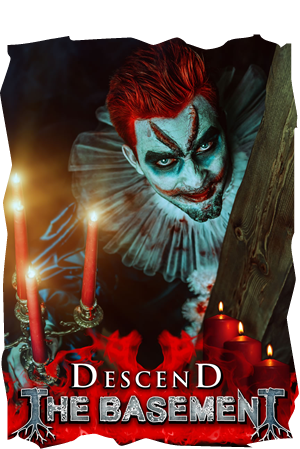
Fortunately, it is fairly easy to train actors to follow a routine, and just so long as that routine has been developed carefully, the show will impress even the toughest audiences. When designing a routine, a producer must consider several common hangups. First, actors will always want to perform for too long. An actor’s shock value is lost quickly after he or she has revealed himself to the audience. Limit them to around ten seconds of performance time. From the time an actor reveals himself to the audience to the time he makes a calculated, and well rehearsed exit should be no more than ten to twelve seconds.
Second, most actors will want to reveal themselves by jumping out at patrons. As a customer, the novelty of the pop-out scare is lost fairly quickly. To alleviate this, make sure that some actors focus on building suspense, rather than popping out. For instance, if an actor in a hallway is constantly just out of view of the patrons, only visible for a fleeting moment every few seconds, a customer will begin to feel suspense build. That actor may not get to experience the rush involved with scaring the patrons facetoface, but he has successfully built suspense, and increased the value of the show.
Last, talking and hovering ruin the show. There is nothing less scary than when a costumed monster scares a patron and then continues to follow them. Actors love to do this, but it is far more annoying than scary to the patrons. Furthermore, it reminds people that they are in a haunted house. The actors are not allowed to touch you. Once you remember that, the scare factor plummets.